Content365BlogFestivals and calendar
Navratri and Dussehra posts for business: nine nights of content and the big day after
Navratri posts for business, planned night by night: colour posts, Durga Puja wishes, Dussehra offer posts and a simple ten-day plan you can follow.
Every year it goes the same way. Shradh ends, the showroom gets its marigold torans, the sales team starts talking about Dussehra bookings, and somebody asks who is doing the Navratri posts. Nobody is. By the third night your competitor down the road has posted a fresh colour of the day every morning, and your page still shows a monsoon service camp. By Dussehra, when families actually come in to book, you are scrambling for one hurried greeting.
Navratri posts for business are not hard to think of. They are hard to keep up, because the festival is ten days long and asks for something new every single day, right when the shop floor is at its busiest. This guide lays out a night-by-night plan you can follow on your own, and then shows how Content365 can have the whole season ready before it begins.
Why the festival season deserves its own plan
Navratri and Dussehra usually fall in September or October, and the dates move each year with the lunar calendar. For many Indian businesses this is the real start of festival season marketing. Families have been postponing purchases through the inauspicious fortnight before it, and once Navratri starts, the mood changes. People shop for clothes, jewellery, gifts, electronics, homes and especially vehicles. Dussehra, or Vijayadashami, is widely seen as a good day to begin something new, and in many families that means taking delivery of a car or a two-wheeler.
The season also means different things in different parts of India, and your posts should know which one your customers live in:
- Gujarat and much of western India: garba and dandiya nights, chaniya cholis, late evenings.
- West Bengal, Assam, Odisha and Bengali communities everywhere: Durga Puja, pandal hopping, new clothes, family meals.
- Tamil Nadu, Karnataka and Andhra Pradesh: Golu displays at home, and Ayudha Puja, when tools, machines and vehicles are cleaned and worshipped.
- North India: Ramlila, fasting, and the burning of Ravana's effigy on Dussehra.
A post that wishes a Coimbatore customer a happy garba night feels a little off. A post about Ayudha Puja and keeping your vehicle in good shape feels like you know them. That one choice does more for you than any amount of decoration.
Navratri colours posts: one colour, one post, nine mornings
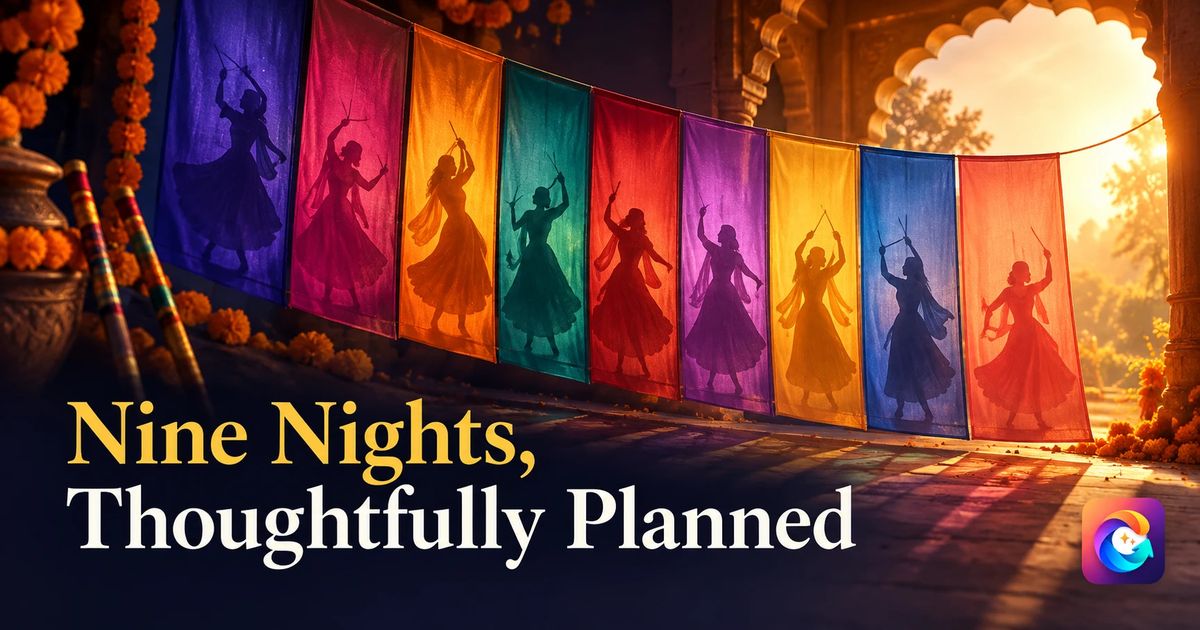
The single most popular format of the season is the colour of the day. Each of the nine days is linked with a colour, and many people, especially in Maharashtra and Gujarat, dress in that colour. The order is set each year by the weekday Navratri starts on, so do not reuse last year's list. Check a reliable panchang or calendar when the dates are announced.
Navratri colours posts are some of the easiest Navratri posts for business to get right, because they are useful, not just decorative. People genuinely check them in the morning before getting dressed. A business can join in without forcing a sales message into every post:
- A clothing store shows a saree or kurta in the day's colour.
- A car dealer shows a model in a matching paint shade, or simply uses the colour as the background of a greeting.
- A salon suggests a nail or makeup shade for the day.
- A sweet shop arranges a tray of mithai in the colour.

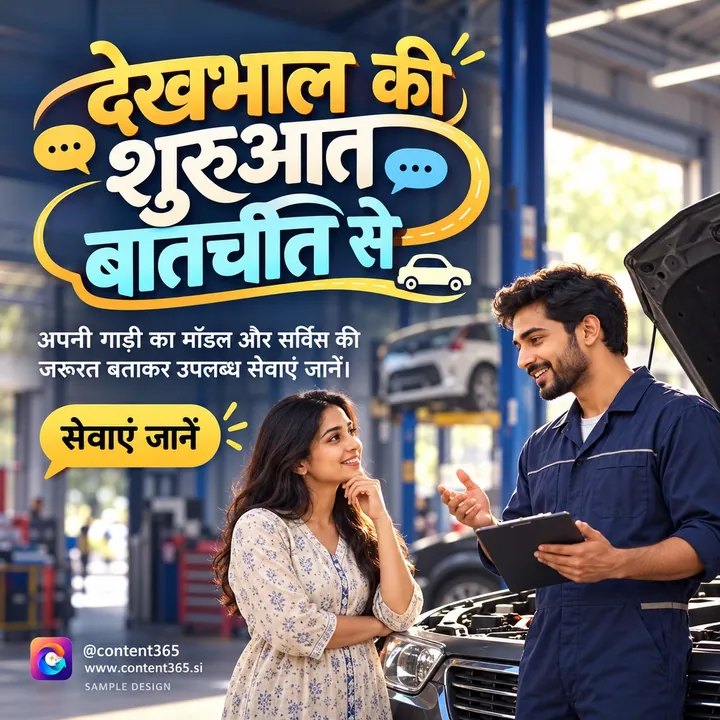
The sample above was made for a made-up body and paint workshop. Notice what it does not do: it does not shout. The headline is short, a small button says what to do next, and the picture carries the mood. A colour-of-the-day post should feel the same way.
A ten-day plan of Navratri posts for business
Here is a plan you can copy. It works for most local businesses, and you can swap the examples for your own products. Keep one post a day, and use the evening for a Story or WhatsApp Status if you have the time.
| Day | Post idea | Example for a vehicle dealer |
|---|---|---|
| Night 1 | Ghatasthapana greeting, the season begins | "Nine nights of new beginnings start today" |
| Night 2 | Colour of the day plus one product | A model in the day's colour |
| Night 3 | Behind the scenes: decorating the shop | The showroom torans going up |
| Night 4 | Colour of the day plus a helpful tip | Check tyre pressure before long festival drives |
| Night 5 | Your team in festive clothes | Service staff in the day's colour |
| Night 6 | Early booking reminder for Dussehra | "Book now, take delivery on Vijayadashami" |
| Night 7 | Colour of the day plus a customer question answered | "Can I register a vehicle on the festival day?" |
| Night 8 | Durga Ashtami greeting | A calm, respectful wish |
| Night 9 | Maha Navami or Ayudha Puja greeting | Clean your vehicle, honour your tools |
| Dussehra | Vijayadashami wish and the offer post | "Victory of good begins with a new journey" |
Two rules make this plan work. First, keep greetings and offers separate on the holy days. Ashtami and Navami posts should be wishes, not discounts. Second, put the practical post (bookings, timings, delivery slots) a few days before Dussehra, not on the day itself, because by then families have already decided.
Durga Puja business wishes that sound like you
If many of your customers are Bengali, the Puja days matter more than the nine colours. Durga Puja business wishes should be warm and simple. "Shubho Bijoya" on Dashami, or "Wishing you and your family a joyful Durga Puja" on Saptami, is enough. Add a picture that fits your trade and your logo, and leave it there.
A few things to avoid during this time:
- Do not put discount stickers on images of the goddess or religious symbols. Many people find it disrespectful.
- Do not mix up the festivals. Durga Puja, Navratri and Dussehra overlap, but each community calls its days by its own names.
- Do not post the same greeting in five languages on one image. Pick the main language of your customers and write a proper caption for the rest.
Hindi captions help a lot in the north and in many cities elsewhere. Our guide to Hindi captions for business posts shows how to write one that does not read like a translation.
Dussehra offer posts that do not feel pushy
Dussehra is the day most businesses want to sell on, and that is fair. People do come in ready to buy. The trick is to make the offer feel like part of the celebration, not a billboard.
Good Dussehra offer posts usually have:
- One offer, not five. "Free first service with every booking this week" is easier to remember than a list.
- A clear end. "Till Dussehra evening" or "this week only", and then actually end it.
- A real call to action. Your phone number, WhatsApp, or address, printed clearly on the image.
- The festival meaning, lightly. Good over evil, new beginnings, victory. One line is enough.

A headline like "Step Into Your Next Car Conversation" fits Dussehra without naming a discount at all. The offer goes in the caption, and the picture keeps the feeling. This pairing, a calm image and a specific caption, is what makes a festival post look professional rather than desperate.
After Dussehra, Diwali is only a few weeks away, usually in October or November. Plan the gap. A short series on delivery days, happy-customer-style posts that you have permission to share, or service reminders keeps the page alive until the next big moment. Our Diwali social media post ideas pick up from there, and the festival posts calendar for India shows the whole year at a glance. If you sell vehicles, our guide to car dealer social media marketing has ideas well beyond the festival season. Whatever you sell, confirm this year's dates from a reliable panchang and make all ten Navratri posts for business in one sitting a week before, because festival week is the worst time to design.
How Content365 handles Navratri and Dussehra for you
Content365 makes a full year of branded posts for your business in one go: 365 posts, one for every day. Indian festivals and the financial year are planned into the calendar on the days they fall, so Navratri, Dussehra and Diwali are already there when you open your gallery, along with the quieter days around them.
Each post is a 1080 x 1350 image with a square-safe centre, ready for Instagram, Facebook, LinkedIn, X and WhatsApp. An image model paints the scene with no text in it, and then the studio places your real logo, business name, phone, website and call to action on top, from the exact text you gave. Your logo is never redrawn by the model, so it looks the same on Night 1 and on Dussehra.
Captions are written for Instagram, Facebook, LinkedIn and X, plus Hindi, for every day. Every picture is checked by a vision model for stray text and problems, with up to three tries per day; a day that never passes still arrives, with a visible warning so you know to look at it.
You review every day in your own gallery first. Nothing posts by itself: we do not post on your pages. You or your team post each day when you are ready. Everything comes in one download folder with the pictures, captions.csv, calendar.csv and a gallery that opens on any phone.
The yearly plan is ₹3,999 including GST for the whole year, for one brand. Want to see what your brand looks like first? The free plan gives you 2 posts for your brand every 48 hours with no payment needed. Sign in with Google to start free.
Frequently asked questions
When do Navratri and Dussehra fall this year?
They move every year with the lunar calendar and usually fall in September or October. Check a reliable panchang once the dates are announced, and plan your posts at least a week before the first night.
Should a business post every day during Navratri?
If you can, yes. Nine nights is a natural daily series, and the colour of the day gives you an easy theme. If daily is too much, post on the first night, two or three colour days, Ashtami or Navami, and Dussehra.
Can I put offers on Navratri greeting posts?
Keep the holy-day greetings as plain wishes, and put offers on separate posts on other days. Mixing discounts with religious images can put people off.
Do I need different posts for Durga Puja and Navratri?
If your customers are mostly Bengali or from eastern India, yes. Use Durga Puja business wishes with the names they use, such as Shubho Bijoya on Dashami. Elsewhere, Navratri and Dussehra posts are enough.
Does Content365 include festival posts in the yearly plan?
Yes. Indian festivals are planned into the calendar on the days they fall, so the season is already in your 365 days. You review each one and post it yourself.
Have the whole season ready before the first night
This festival season, do not spend Navratri chasing posts. Get the year planned, festivals included, and spend those nights with your customers instead. See pricing for the yearly plan, or browse the sample library at industries to see posts made for businesses like yours. When you are ready, the yearly plan is one payment for 365 days.